 Qazi Forex Tips
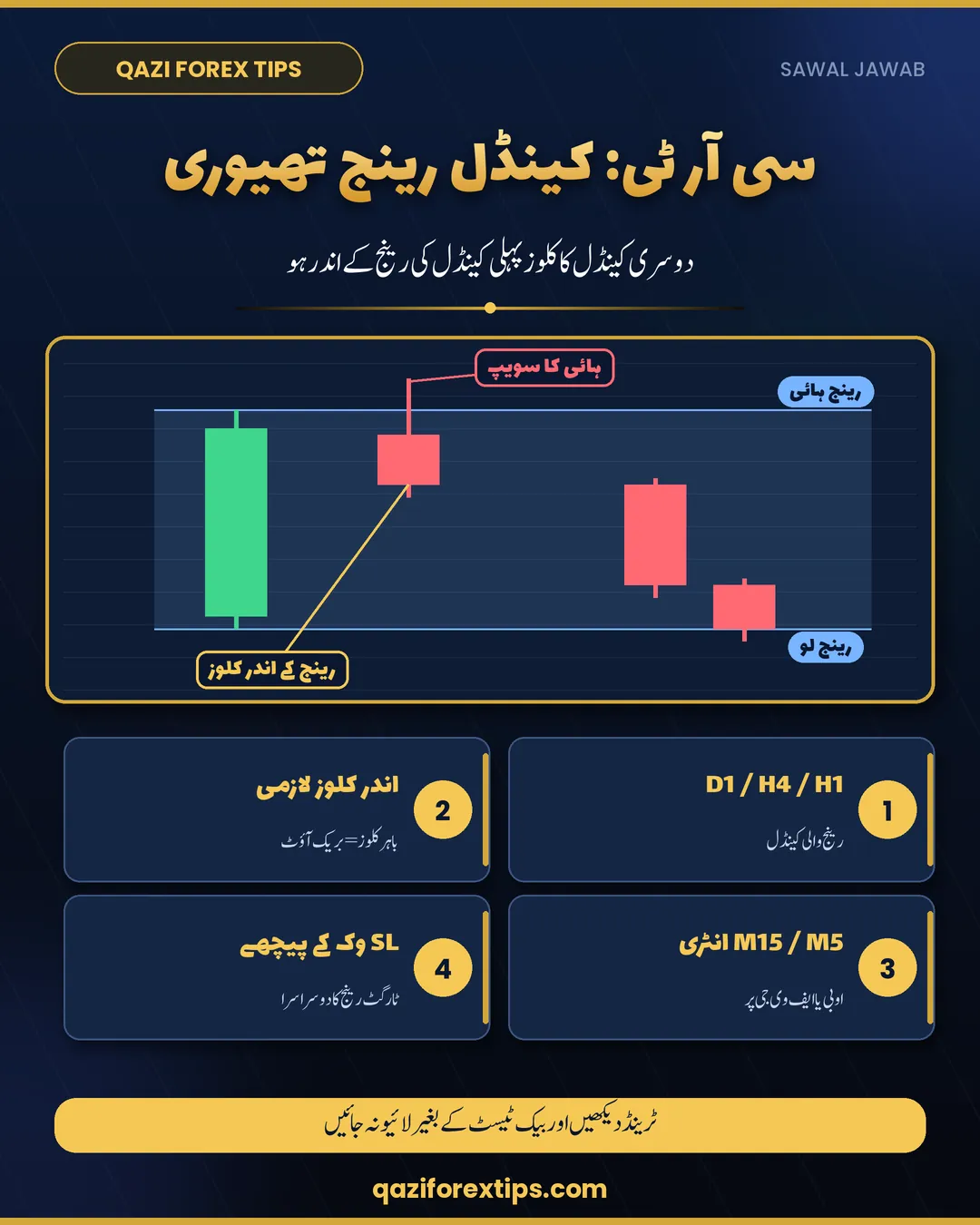
CRT (candle range theory) kya hai, kis timeframe par kaam karti hai, aur entry, stop loss aur target kahan rakhein?

سی آر ٹی کے دو ضروری اصول
جی، بہت اچھی اور محنت سے لکھی ہوئی پوسٹ ہے، ماشاءاللہ۔ خاص طور پر آخری بات سب سے اہم ہے کہ بیک ٹیسٹ کے بغیر کوئی سٹریٹجی کامیاب نہیں ہوتی۔ نئے ساتھیوں کے لیے دو چیزیں اور ساتھ ملا لیں:
پہلی بات: دوسری کینڈل کا کلوز پہلی کینڈل کی رینج کے اندر ہونا لازمی ہے، تب ہی یہ CRT بنتا ہے۔ اگر باہر کلوز ہوا تو وہ CRT نہیں بلکہ بریک آؤٹ ہے۔
دوسری بات: اسٹاپ لاس (SL) سویپ والی وک کے پیچھے رکھیں، اور پہلا ٹارگٹ رینج کا دوسرا سرا ہو۔
(یورو ڈالر دو گھنٹے والی مثال پر:) ماشاءاللہ بہت اچھا کام کیا ہے۔ دو گھنٹے کے چارٹ پر پرائس اوپر والے ایف وی جی تک آئی، پچھلے ہائی کے اوپر ویک نکالی اور واپس رینج کے اندر کلوز ہوئی۔ یہی اصل سی آر ٹی ہے، اور اس کے بعد پندرہ منٹ پر انٹری مارک کرنا بھی بالکل صحیح طریقہ ہے۔ اب پرائس نیچے والے ڈیمانڈ زون تک پہنچ چکی ہے، اس لیے:
1۔ یہاں پرافٹ کا بڑا حصہ بک کر لیں یا سٹاپ بریک ایون پر رکھ دیں۔
2۔ اس زون پر نئی سیل لینے سے پہلے دیکھیں کہ کینڈلز زون کے نیچے کلوز ہو رہی ہیں یا یہاں سے ریجیکشن آ رہی ہے۔
3۔ اگلی پوسٹ میں انٹری، سٹاپ لاس اور رسک ریوارڈ بھی لکھ دیں، تاکہ سب سیکھ سکیں۔
What CRT is
Candle range theory (CRT) treats one higher-timeframe candle as a range: its high and its low. The next candle often runs beyond one side of that range to take the stops resting there (a liquidity sweep), then returns into the range and travels toward the other side. In simple terms: a fake break of a candle's high or low, followed by a move across the range.
Rule 1: the second candle must close inside the range
This is the rule that separates CRT from a breakout. If the sweeping candle closes back inside the first candle's high and low, the break was rejected and CRT is valid. If it closes outside, the market has accepted the new price. That is a breakout, not a CRT, and selling it is trading against the move. See also how to spot a false breakout.
Rule 2: stop behind the wick, target the other side
The wick of the sweeping candle is where the idea becomes wrong, so the stop loss goes just beyond it. The first target is the opposite end of the range. Because the stop is small and the target is the whole range, CRT trades often offer good risk to reward.
From the group: common CRT marking mistakes on H4.
Timeframes and entry
- Range candle: daily, H4, H1 or H2 are commonly used. The bigger the candle's timeframe, the more meaningful the range.
- Trend: CRT setups in the direction of the higher-timeframe trend work better than counter-trend ones.
- Entry: after the sweeping candle closes, drop to M15 or M5 and enter at an order block or fair value gap created by the rejection.
Example: EURUSD on the 2-hour chart
In the member's example, price on the 2-hour chart rallied into a fair value gap above, poked a wick above the previous high and closed back inside the range. That is a textbook CRT. The entry was then marked on the 15-minute chart. When price later reached the demand zone at the bottom of the range, Dr. Qazi's advice was to book most of the profit or move the stop to breakeven, and before any new sell, to check whether candles were closing below the zone or rejecting it.
Entry order after the sweep: where the FVG fits
A member marked an H1 CRT on Gold: a red range candle, then a second candle that swept below the range low and closed back inside, plus a 15-minute fair value gap in the lower part of the range. When is the entry? First read which side was swept, because that decides everything:
- The H1 candle that swept the level must close back inside the range. Only then is the CRT confirmed.
- Low swept = buy, target the CRT high. High swept = sell, target the CRT low.
- On M15, wait for a break of structure in the trade direction after the sweep. Enter when price returns into the FVG or order block created by that move, with the stop beyond the sweep wick.
- An FVG on the side of the sweep (the lower part of the range for a buy) is an entry area. An FVG sitting right next to the target is a place to take partial profit, not to enter.
- Once price reaches the opposite side of the range, the setup has done its job. Look for the next trade from the next candle's range.
In the member's chart the low was swept, the 15-minute FVG near the bottom of the range was the buy area, and price went on to reach the CRT high. Reading the swept side wrongly flips the whole trade, so always mark it first.
Back-test it before trading it
As the original post said, no strategy works without back-testing. Test at least 50 CRT setups on your pair and timeframe, and write down the win rate and the average risk to reward: how to back-test a strategy. When posting a trade in the group, always include the entry, stop loss and risk to reward so everyone can learn from it.
Classic CRT or a CRT breakout? See the full buy and sell steps and the difference between the two models.
Khulasa (Roman Urdu / Hindi)
- CRT mein aik bari candle ki high aur low range banti hai. Agli candle ek side ki liquidity sweep karti hai aur wapas range mein aati hai.
- Doosri candle ka close pehli candle ki range ke andar lazmi hai. Bahar close ho to CRT nahi, breakout hai.
- SL sweep wali wick ke peechay, aur pehla target range ka doosra sira.
- Range candle D1, H4, H1 ya H2. Entry M15 ya M5 par order block ya FVG par. Trend ki direction mein behtar.
- Target zone par profit book karein ya SL breakeven. Bina backtest ke live na jayein.
Questions
What is CRT in forex?
Candle range theory uses one higher-timeframe candle's high and low as a range. When the next candle sweeps one side and closes back inside, price often moves to the other side of the range.
What is the most important CRT rule?
The second candle must close inside the first candle's range. A close outside the range is a breakout, not a CRT.
Where should the stop loss go in a CRT trade?
Just beyond the wick of the sweeping candle. The first target is the opposite side of the range.
Which timeframe is best for CRT?
The range candle is usually taken from daily, H4, H2 or H1, with the entry on M15 or M5 at an order block or fair value gap.
اکثر پوچھے جانے والے سوال
سی آر ٹی کیا ہے؟
ایک بڑی کینڈل کی ہائی اور لو کو رینج مان کر، اگلی کینڈل کے سویپ کے بعد رینج کے دوسرے سرے کی طرف ٹریڈ۔
سی آر ٹی کا سب سے اہم اصول؟
دوسری کینڈل کا کلوز پہلی کینڈل کی رینج کے اندر ہو۔ باہر کلوز ہو تو بریک آؤٹ ہے۔
سٹاپ لاس کہاں رکھیں؟
سویپ والی وک کے پیچھے، اور پہلا ٹارگٹ رینج کا دوسرا سرا۔
Aksar Pooche Jane Wale Sawal (Roman Urdu / Hindi)
CRT kya hai?
Aik bari candle ki range, agli candle ka sweep aur wapas andar close, phir range ke doosre siray tak move.
CRT ka sab se zaroori usool?
Doosri candle ka close range ke andar lazmi hai.
CRT mein SL kahan?
Sweep wali wick ke peechay.
Learn more
- Liquidity in forex and liquidity sweeps
- False breakouts: how to spot them
- Fair value gap (FVG) explained
- Order blocks: how to mark and trade them
- FVG entry: enter at once or wait for the retest?
Have a question of your own, or a chart you want checked? Post it with your reasoning in our free Facebook group.
Join the free groupEducation only, not financial advice. Trading forex, Gold and CFDs carries a high risk of loss. Spreads, leverage and contract sizes differ by broker; check your own broker's specifications.