 Qazi Forex Tips
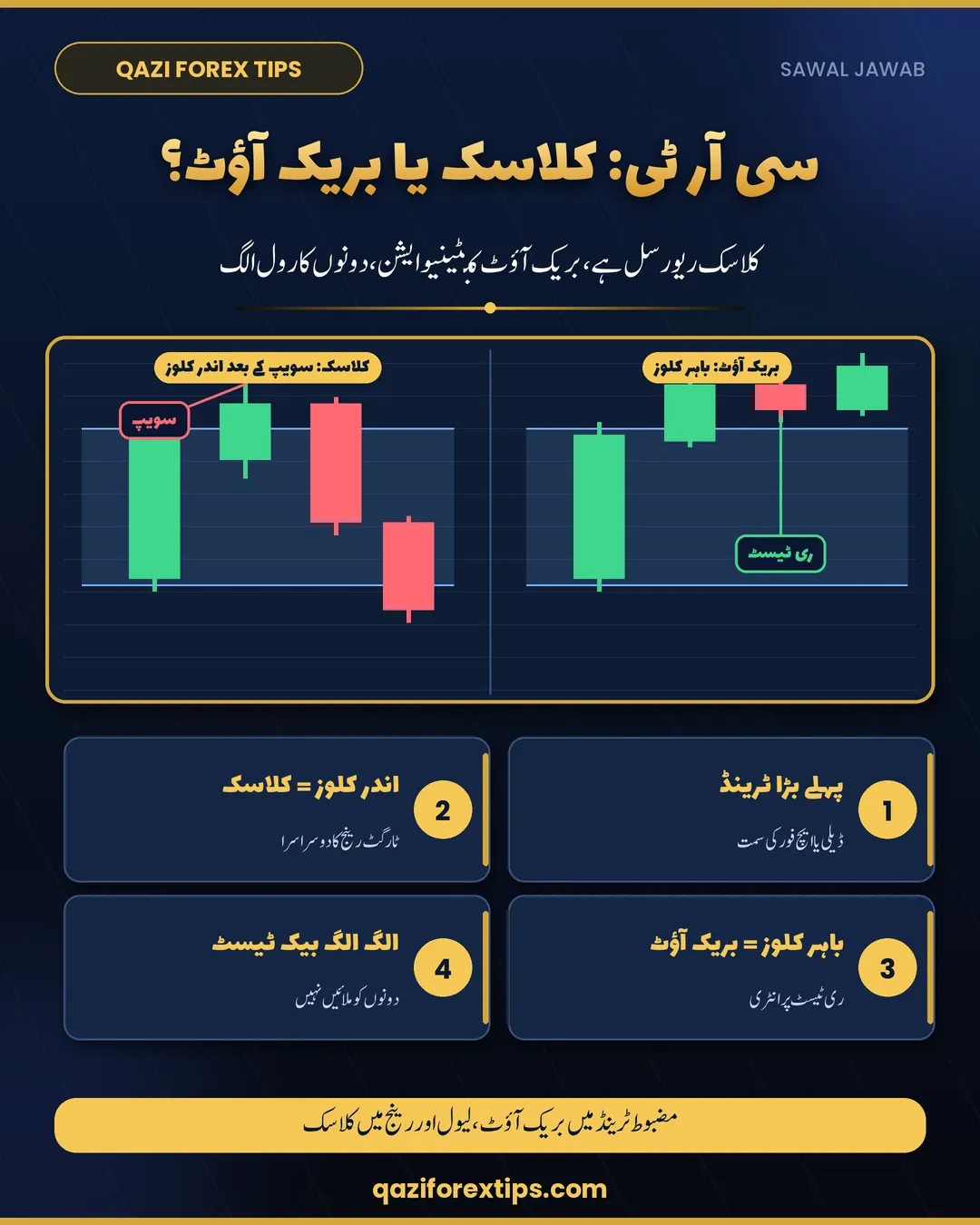
AP bearish or bulish dono trend ma aik aik trade CRT ma len us ka mukmal trika share kren. A to Z ta Keh agr koi confusing ha to wi clear ho gae. (Ek aur member: classic CRT ki entry teesri candle par hoti hai ya breakout par, kis ka success ratio zyada hai?)

سی آر ٹی کا مکمل طریقہ: بائے اور سیل دونوں
جی بھائی، سی آر ٹی کا مکمل طریقہ دونوں ٹرینڈز کے لیے سٹیپ بائی سٹیپ:
1۔ پہلے بڑا ٹائم فریم دیکھیں، مثلاً ایچ فور یا ڈیلی، اور طے کریں کہ ٹرینڈ اپ ہے یا ڈاؤن۔ ٹریڈ صرف ٹرینڈ کی سمت میں لیں۔
2۔ پھر ایک گھنٹے یا چار گھنٹے کی وہ کینڈل منتخب کریں جو کسی اہم لیول پر بنی ہو، یہ رینج والی کینڈل ہے۔ اس کا ہائی اور لو مارک کر لیں۔
3۔ بیئرش ٹرینڈ میں اگلی کینڈل رینج کے ہائی کے اوپر جائے یعنی لیکوئیڈیٹی لے، اور واپس رینج کے اندر کلوز دے، تو یہ سیل کا سیٹ اپ ہے۔
4۔ بلش ٹرینڈ میں اگلی کینڈل رینج کے لو کے نیچے جائے اور واپس رینج کے اندر کلوز دے، تو یہ بائے کا سیٹ اپ ہے۔
5۔ انٹری چھوٹے ٹائم فریم پر لیں، پندرہ منٹ یا پانچ منٹ پر سٹرکچر بریک ہونے کے بعد ری ٹیسٹ پر۔
6۔ اسٹاپ لاس سویپ کرنے والی وک کے پیچھے رکھیں۔ پہلا ٹارگٹ رینج کا درمیان اور دوسرا رینج کی دوسری طرف۔
7۔ اگر سویپ والی کینڈل رینج کے باہر ہی کلوز دے دے تو یہ سی آر ٹی نہیں رہا بلکہ بریک آؤٹ ہے، اس پر الٹی ٹریڈ نہ لیں۔
کلاسک اور بریک آؤٹ والے سوال پر: دونوں کا مقصد الگ ہے۔ کلاسک سی آر ٹی ریورسل والا ماڈل ہے اور بریک آؤٹ کنٹینیوایشن والا۔ عام طور پر اہم لیول یا رینجنگ مارکیٹ میں کلاسک بہتر چلتی ہے اور مضبوط ٹرینڈ میں بریک آؤٹ۔ دونوں کی الگ الگ پچاس پچاس ٹریڈز بیک ٹیسٹ کریں اور دونوں کو ملا کر ٹریڈ نہ کریں۔
Two models that look alike
CRT starts with one candle on a higher timeframe, usually H1, H4 or Daily. Its high and low form the range. What the next candle does with that range decides which model you are trading. The rules for the classic model are covered in CRT rules: the second candle must close inside the range; this answer adds the full buy and sell steps and the breakout variant that members often call "CRT" too.
| Classic CRT | CRT breakout | |
|---|---|---|
| What the next candle does | Sweeps one side of the range, then closes back inside | Closes outside the range with a strong body |
| Type of trade | Reversal toward the other side of the range | Continuation in the direction of the break |
| Entry | Lower timeframe, after a break of structure, on the retest | On the retest of the broken range high or low |
| Stop loss | Behind the sweep wick | Back inside the range, beyond the retest |
| Works best | At a key level, or in a ranging market | In a strong trend |
Bearish trend: the sell steps
- Confirm the trend on H4 or Daily: lower highs and lower lows. See market structure if this is new.
- Mark the range candle at a level, for example an H1 candle that formed into resistance.
- Wait for the next candle to trade above the range high (taking the buy stops) and close back inside the range.
- Drop to M15 or M5. Wait for a break of structure down, then enter on the retest.
- Stop above the sweep wick. Target 1 is the middle of the range, target 2 the range low.
Bullish trend: the buy steps
The mirror image: higher highs and higher lows on the higher timeframe, the next candle sweeps the range low and closes back inside, a break of structure up on M15 or M5, entry on the retest, stop below the sweep wick, targets at the middle and the top of the range.
Example: GBPUSD, H1 range, sell
| Step | Price | Why |
|---|---|---|
| Range candle (H1) | 1.2700 to 1.2760 | Formed into an H4 resistance in a downtrend |
| Sweep | High at 1.2772, close 1.2748 | Took the range high, closed back inside |
| Entry (after M5 BOS) | 1.2745 | Retest of the broken M5 low |
| Stop loss | 1.2775 | Above the sweep wick (30 pips) |
| Targets | 1.2730, then 1.2700 | Middle of the range (15 pips), then the range low (45 pips, 1:1.5) |
Example numbers to show the method, not a trade call. Many traders close half at target 1 and move the stop to break-even. If the range is too small for the second target to give at least 1:1.5, skip the trade. See risk reward ratio.
Which one has the better success ratio?
There is no honest single number. The classic model tends to do better at a clear level or inside a range, and the breakout model in a strong trend, but your result depends on your timeframe, pair and session. The only way to know is to back-test each model on its own, about 50 trades each, in the QFT Replay Simulator, and keep them in separate columns of your trading journal. Do not switch models in the middle of a trade because price did something unexpected: that is how a reversal plan turns into a chase.
Common mistakes
- Calling every range breakout "CRT" and then using the reversal stop and target.
- Taking a classic CRT against a strong higher-timeframe trend.
- Entering as soon as the sweep candle closes, without a lower-timeframe break of structure.
- A stop inside the wick, so the second sweep takes you out.
Khulasa (Roman Urdu / Hindi)
- CRT mein pehle bara time frame (H4, Daily) ka trend dekhein aur trade sirf trend ki simt mein lein.
- Kisi ahem level par bani H1 ya H4 candle ki range mark karein. Agli candle ek taraf sweep kare aur range ke andar close de to classic CRT hai.
- Sell: range high ka sweep aur andar close. Buy: range low ka sweep aur andar close. Entry M15 ya M5 par structure break ke baad retest par.
- SL sweep wali wick ke peeche, pehla target range ka darmiyan, doosra range ka doosra sira.
- Candle range ke bahar close de to wo breakout hai, classic CRT nahi. Breakout mein entry retest par aur trade break ki simt mein.
- Dono models ko alag alag 50 trades back-test karein, mila kar trade na karein.
Questions
What is the difference between classic CRT and a CRT breakout?
In classic CRT the next candle sweeps one side of the range and closes back inside, and you trade back toward the other side. In a breakout the candle closes outside the range and you trade in the direction of the break, usually on the retest.
How do you take a CRT sell trade?
In a higher-timeframe downtrend, mark a range candle at a level, wait for the next candle to sweep the range high and close back inside, then enter on a lower-timeframe break of structure and retest, with the stop above the sweep wick.
Which timeframe is best for CRT?
Mark the range on H1, H4 or Daily and take the entry on M15 or M5.
Which CRT model has the higher win rate?
It depends on the market condition and your own rules. Back-test about 50 trades of each model separately and compare the win rate and the average reward to risk.
اکثر پوچھے جانے والے سوال
کلاسک سی آر ٹی اور بریک آؤٹ میں کیا فرق ہے؟
کلاسک میں اگلی کینڈل سویپ کر کے رینج کے اندر کلوز دیتی ہے اور ٹریڈ رینج کی دوسری طرف ہوتی ہے۔ بریک آؤٹ میں کینڈل رینج کے باہر کلوز دیتی ہے اور ٹریڈ بریک کی سمت میں ری ٹیسٹ پر ہوتی ہے۔
سی آر ٹی میں اسٹاپ لاس کہاں لگائیں؟
سویپ کرنے والی وک کے پیچھے۔
کیا سی آر ٹی ٹرینڈ کے خلاف لے سکتے ہیں؟
بہتر یہی ہے کہ بڑے ٹائم فریم کے ٹرینڈ کی سمت میں لیں، ٹرینڈ کے خلاف کامیابی کا چانس کم ہوتا ہے۔
Aksar Pooche Jane Wale Sawal (Roman Urdu / Hindi)
CRT buy trade kaise lein?
Bade time frame par uptrend ho, range low ka sweep ho aur candle wapas range ke andar close de, phir M15 ya M5 par structure break ke baad retest par entry lein.
Classic CRT aur breakout CRT mein kaun sa behtar hai?
Level ya ranging market mein classic, strong trend mein breakout. Faisla apne back-test ke data se karein.
CRT mein target kahan rakhein?
Pehla target range ka darmiyan aur doosra range ka doosra sira.
Learn more
- CRT rules: the second candle must close inside the range
- Breakout strategy lesson
- False breakouts and how to avoid them
- Liquidity in forex: where stops sit
- Market structure lesson
- How to back-test a strategy
Have a question of your own, or a chart you want checked? Post it with your reasoning in our free Facebook group.
Join the free groupEducation only, not financial advice. Trading forex, Gold and CFDs carries a high risk of loss. Spreads, leverage and contract sizes differ by broker; check your own broker's specifications.